Lubrication and Grease Groove Design for Bronze Bearings
Grease grooves and oil grooves help distribute lubricant across the working surface of a bronze bushing or bearing. A good groove pattern can reduce dry contact, help maintain a lubricant film, and make maintenance easier. A poor groove pattern can reduce bearing area, interrupt the load zone, or scrape lubricant away from the surface that needs it most.
This guide is for engineers, buyers, and maintenance teams preparing drawings for bronze bushings, sleeve bearings, wear plates, and custom machined components. Groove design should always be checked against load direction, motion type, wall thickness, shaft finish, lubricant, and assembly access.
Why Grease Grooves Matter in Bronze Bushings
Bronze bearings often operate with sliding or rotating contact. Lubrication helps separate the shaft and bearing surface, reduce friction, carry away heat, and limit adhesive wear. Grooves act as lubricant reservoirs and distribution paths.
The design goal is simple: supply lubricant to the working surface without weakening the bushing or cutting too much load-bearing area. That is why groove location and pattern matter as much as groove size.
Standard Groove Patterns and Their Applications
| Groove pattern | Common use | Design note |
|---|---|---|
| Oil hole only | Short bushings or light-duty lubrication points | Often used when a full groove would remove too much bearing area |
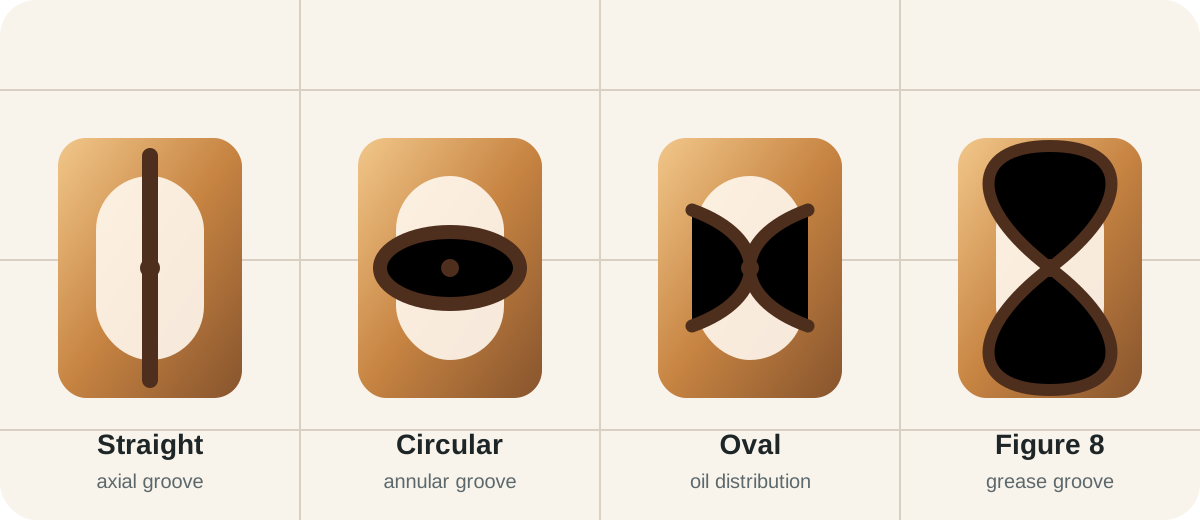
| Straight axial groove | Reciprocating or oscillating motion, grease distribution along length | Usually placed outside the primary loaded zone |
| Circular / annular groove | Pressure-fed lubrication or rotation where lubricant must wrap around the bore | Can divide the bearing surface, so location and load direction matter |
| Oval groove | Broader lubricant distribution than a single straight groove | Common in sleeve bushings when grease needs to spread without a full annular cut |
| Figure-8 groove | Grease-lubricated or multi-directional distribution requirements | Useful for many bronze bushings but removes more bearing surface than a simple oil hole |
Groove Location: Keep It Out of the Loaded Zone
SERP references from bronze bushing suppliers consistently emphasize that grooves and oil holes should be placed in the unloaded area when possible. The highest pressure zone needs bearing area and lubricant film support. Cutting a groove directly through that zone can reduce load capacity and disrupt lubrication.
For many horizontal shaft applications, lubrication entry is commonly considered around the top or side of the bearing rather than the bottom load zone. The exact position depends on load direction, rotation, assembly orientation, and how grease or oil is supplied.
Engineering Guidelines for Groove Dimensions
There is no universal groove width or depth that fits every bronze bushing. The right design depends on wall thickness, bore diameter, bearing length, lubricant type, motion, and load.
Practical design checks include:
- Keep enough wall thickness after grooving so the bushing is not weakened.
- Avoid sharp groove edges that can wipe lubricant or damage the shaft; chamfer or blend edges where appropriate.
- Stop grooves short of the bushing ends unless the lubrication method requires end feed.
- Confirm whether the lubricant is grease, oil, solid lubricant, or graphite plug style.
- Review whether the motion is continuous rotation, oscillation, reciprocating motion, or intermittent movement.
- Identify the loaded and unloaded zones before placing oil holes or grooves.
If a drawing calls out a groove pattern but not the groove width, depth, or edge condition, clarify those dimensions before production.
Oil Grooves vs Grease Grooves
Oil and grease behave differently. Oil flows more easily and may work with smaller paths or pressure-fed systems. Grease is thicker and often benefits from groove patterns that help distribute it across the bearing surface.
For oil-lubricated bronze bearings, groove edge shape and oil film behavior are important. For grease-lubricated bushings, the groove needs enough volume and access for service lubrication without removing excessive bearing area.
Alternatives: Oil-Impregnated and Solid-Lubricant Bushings
Not every application should use a manually greased groove. If regular maintenance is difficult, review self-lubricating options:
- SAE 841 sintered bronze for oil-impregnated porous bronze bearings.
- Sintered Oilite-style bushings for low-maintenance light to moderate duty.
- Solid-lubricant bronze bushings for heavy-load sliding applications where graphite plugs or solid lubricant inserts are specified.
RFQ Details for Grooved Bronze Bushings
Send the drawing, shaft size, housing bore, bushing length, wall thickness, groove pattern, oil hole location, lubricant type, load direction, motion type, quantity, and alloy requirement. If the groove design is not finalized, Precision Bronze can review the application and quote the part with the correct questions identified.